EN
EN
 jp
jp  ko
ko  CN
CN





Call

China's intelligent vehicle industry is entering a new stage of rapid development. Guided by the principle of "enhancing intelligence through safety," K&D's 3A Cover Glass Team is leveraging its capabilities in core automotive display technologies, automotive-grade manufacturing, scenario-based solution development, and supply chain collaboration to support the transition of rearview systems from traditional optical reflection to high-definition digital imaging.
As intelligent cockpits continue to evolve, rearview systems are becoming increasingly important to driving safety. Drivers now expect a wider field of view, clearer images, and more reliable performance under different road and environmental conditions.
Traditional optical rearview mirrors are limited by blind spots and reduced visibility in rain, fog, or low-light conditions. Conventional digital rearview mirrors may also perform poorly in strong sunlight, extreme temperatures, and other complex automotive environments due to limitations in display panel performance.
As a result, the continued development of automotive rearview systems has become an important industry trend.
In this edition of Display Vision, we take a closer look at digital rearview mirrors and how they improve rear visibility and driving safety.
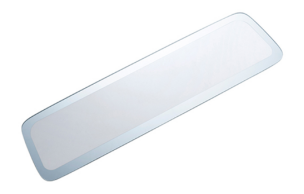
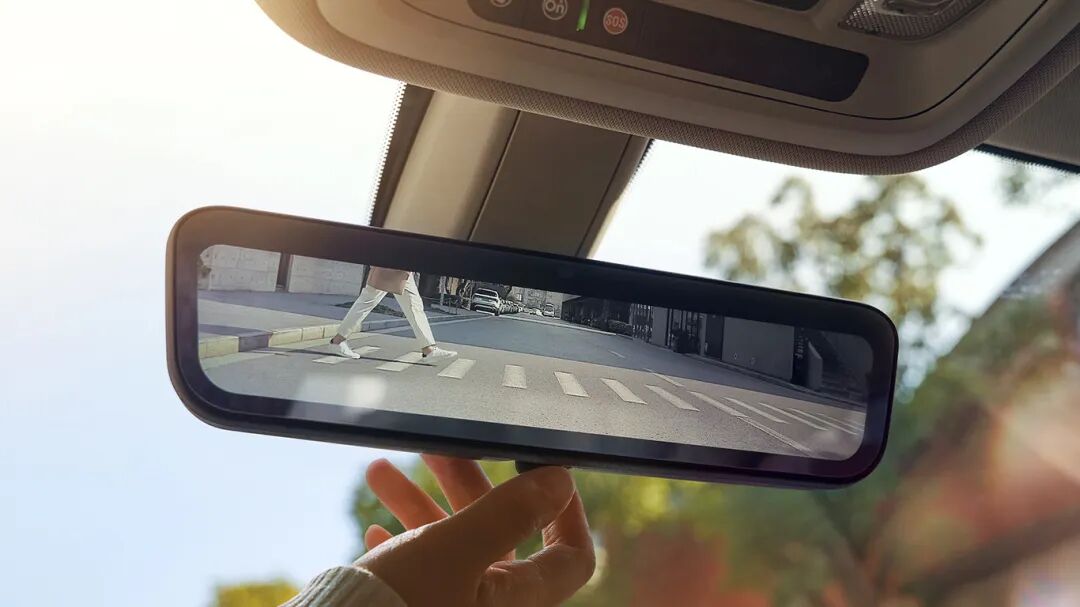
A digital rearview mirror is an intelligent rear-visibility solution that combines automotive-grade high-definition imaging technology with a display panel designed specifically for in-vehicle use.
Unlike traditional rearview mirrors, which rely on optical reflection, a digital rearview mirror captures the road behind the vehicle through a wide-angle rear camera. The recorded image is then processed in real time using intelligent algorithms for glare reduction, noise suppression, distortion correction, and other image enhancements.
The optimized image is transmitted to an automotive display panel, where it is presented clearly to the driver.
By integrating high-definition image capture, intelligent image optimization, and high-quality display performance, the system addresses many of the limitations associated with conventional automotive rearview solutions.
Traditional optical rearview mirrors have a relatively narrow viewing angle because of their physical structure. Rear passengers, child safety seats, and luggage in the cargo area may also obstruct the driver’s rearward view, creating potentially dangerous blind spots.
Some conventional digital rearview mirrors offer only limited improvements in viewing range, while image distortion may reduce the accuracy of what the driver sees.
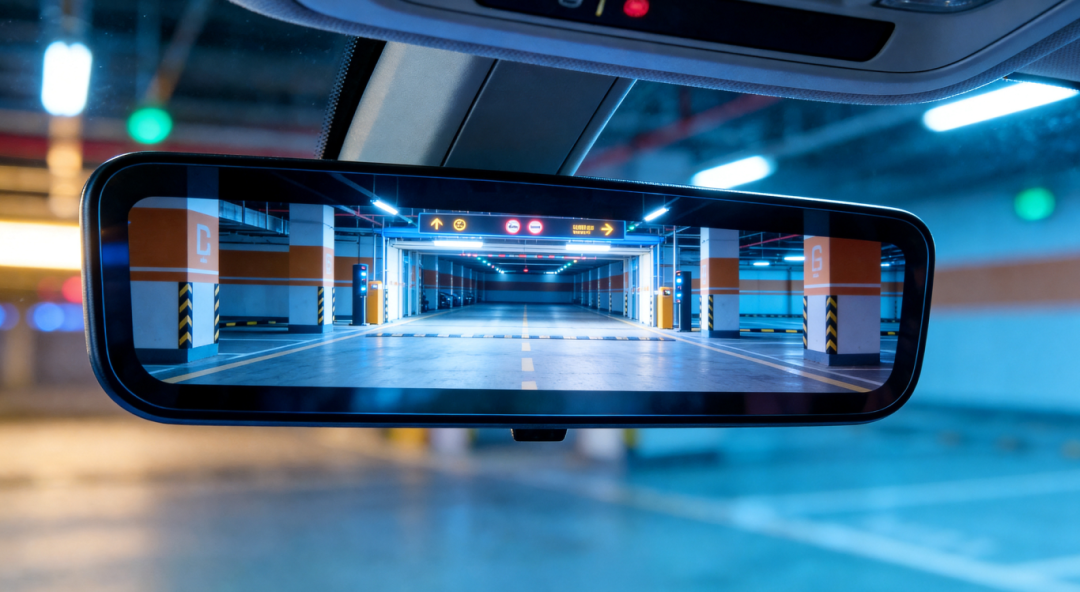
A digital rearview mirror equipped with an automotive-grade wide-angle camera can provide a panoramic view across multiple lanes. This wider field of view helps reduce blind spots around areas such as the B-pillars and C-pillars.
Intelligent distortion-correction algorithms also restore more natural image proportions, allowing the displayed scene to more accurately represent actual road conditions.
Even when the rear seats are fully occupied or the luggage compartment is heavily loaded, the driver can still maintain a clear view of approaching vehicles. This makes lane changes, reversing, and other driving operations safer and more convenient.
Traditional rearview mirrors can become difficult to use when rainwater collects on the mirror surface, fog reduces visibility, or bright headlights create glare at night.
Conventional digital rearview systems may also suffer from overexposure in strong light or excessive image noise in low-light environments.
The camera used in a high-performance digital rearview mirror can be equipped with a hydrophobic coating and heating functionality. These features help prevent water droplets and fog from accumulating on the lens during heavy rain, mist, or other adverse weather conditions.
Combined with intelligent anti-glare processing and enhanced night-vision algorithms, the system can automatically suppress intense light from the headlights of vehicles behind while improving the visibility of darker areas.
This allows drivers to see rear license plates and surrounding road details more clearly, even on roads without street lighting.
The automotive display panel accurately reproduces image details, supporting clear rear visibility during the day, at night, and in changing weather conditions.
Specification | Standard Market Product | Digital Rearview Mirror with K&D Cover Glass |
Size | Standard automotive size | Standard automotive size |
Resolution | 1080P | 2K |
Brightness | 600 nits | 1,000 nits |
Viewing Angle | Standard wide angle | Ultra-wide field of view |
Night-Vision Performance | Basic performance; susceptible to glare | High-definition imaging with intelligent anti-glare |
Environmental Adaptability | Limited performance under strong light | Stable performance across a wide range of automotive environments |
Innovation is the primary driving force behind technological development.
K&D's 3A Team will continue to strengthen its capabilities in intelligent automotive displays and driving-safety technologies. By continuously improving the performance and user experience of digital rearview mirrors, K&D aims to provide vehicle manufacturers with safer, more reliable, and higher-quality integrated rearview solutions.
Looking ahead, K&D will further invest in core technology research and development, enhance automotive-grade quality control, and deepen collaboration across the upstream and downstream supply chain.
Our goal is to become a world-class provider of intelligent automotive display solutions, using technology to support smarter mobility and protect every journey.


Contact Info
Let's discuss how K&D's display solutions can bring your next-generation product to life.
Call
Add